Showing posts with label books. Show all posts

Thursday, October 4, 2012

A Callithump Parade


Since I've been run down and not feeling well of late, making it a bit difficult to see the world, to read, never mind write (and converse, OY!, forgedaboudit!), I'm going to attempt to dazzle you, first, with some original photography; second, with more original photography; third, with engaging video; and fourth, with, well, more engaging video.

Part I
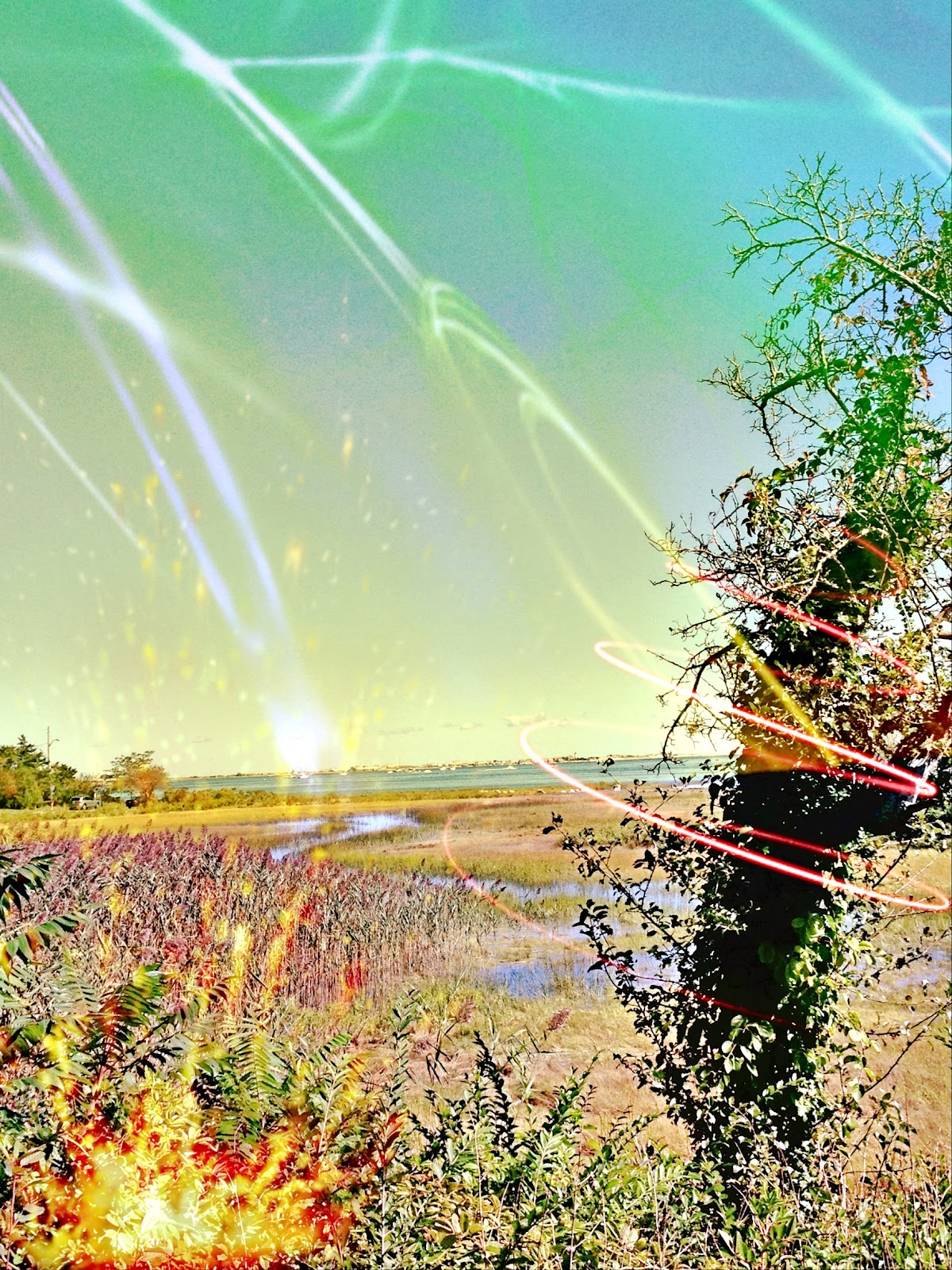
This is what I call the prelude to the Arrival of the Martians at Barnstable Harbor. They are coming, you know. After all, we did invade their extraterrestrial territory. They are due in three weeks or so, just in time for the grand callithump that is known as Halloween. (Now you believe me—don't you?—that I am quite ill.)

I'm posting this particular photo because, unfortunately, I will not be in Barnstable for Halloween and therefore will not be able to offer photo-documentation of the actual coming, or landing, of the Martians. But rest assured, the above is honest evidence that I was, indeed, in Barnstable Harbor for the psychedelic Martians-are-coming prelude. (I'd better warn my mother-in-law.)

Part II

While in New York a couple of weeks ago, I met (I'm using that term loosely, although I really do think, er, believe, that I met) U.S. Poet Laureate (2001-2003) Billy Collins  at the Brooklyn Book Festival, as well as the Pulitzer Prize-winning, U.S. Poet Laureate (2011-2012) Philip Levine. Seated directly in front of me, he was, Billy Collins. Eyes penetrating my glazed, hazel irises. We shared a smile. A wink. A...

You don't believe me, do you? Here, another photo—taken just before the shared winks:


(OK, well I practically met Billy Collins.)

Part III

But, let's get back to the Martians for a moment. Here, in this contemplative poem, Billy recites the derelictions of certain Martians with whom we are familiar, Martians whom, without thought or, sometimes, expression, land on, and feed off of, our verdant, selfless earth, often forgetting to reseed:


(The young gentleman seated beside Billy Collins is Ishmael 'Ish' Islam, New York City's 2012 Youth Poet Laureate. He may be one of those Martians, though, I think not. See Ish, the award winning poet and producer, here, reading his poem Daydreaming at the Voting Booth.)

Part IV

And now, to round off this shivaree, one last reading by Mr. Collins, inspired by the poem Drinking Alonewritten by Li Po, whom we might also describe as one of those self-indulgent Martians:


Beware the Martians. Do not, under any circumstance, let them drink alone! (Or just plain drink.)

Saturday, September 8, 2012

The Heart Dies of this Sweetness


Today's Weekend Wisdom photograph (my rain-drenched Rose of Sharon) is inspired by poet Brigit Pegeen Kelly, whose work was introduced to me last summer by  Darcie Dennigan during a three day poetry workshop. The poem, a beautiful rhapsody/tragedy, entitled The Rose of Sharon, published in The Orchard can be found in its entirety here. This poem came to me yesterday when, peering through a southern facing bedroom window in my home, I noticed how my enormous Rose of Sharon (three of them grouped together, actually) was lunging forward toward lofty, water-jammed downy cheeks that pressed back the noon sun. Wet and heavy with storm, the branches dangled perilously above smaller hedges and a pine tree. We've let the lot go wild. It's outgrown the bed, become unruly and, I'm afraid, is moving toward a mass beheading.

(And what I've done to Tree of breath, Pride of my heart, Pool of my scented breath is simply unforgivable!)

I didn't know a thing about Kelly's work before last year. I returned to her poems, more than just The Rose of Sharon, only of late—for their soothing, pleasing prosody, the juxtaposition of violence and splendor, and for Kelly's general approach to our protean world.

Here, a heart wrenching poem from Kelly's collection of poems, Song.

                                       Song

Listen: there was a goat's head hanging by ropes in a tree.
All night it hung there and sang. And those who heard it
Felt a hurt in their hearts and thought they were hearing
The song of a night bird. They sat up in their beds, and then
They lay back down again. In the night wind, the goat's head
Swayed back and forth, and from far off it shone faintly,
The way the moonlight shone on the train track miles away
Beside which the goat's headless body lay. Some boys
Had hacked its head off. It was harder work than they had imagined.
The goat cried like a man and struggled hard. But they
Finished the job. They hung the bleeding head by the school
And then ran off into the darkness that seems to hide everything.
The head hung in the tree. The body lay by the tracks.
The head called to the body. The body to the head.
They missed each other. The missing grew large between them,
Until it pulled the heart right out of the body, until
The drawn heart flew toward the head, flew as a bird flies
Back to its cage and the familiar perch from which it trills.
Then the heart sang in the head, softly at first and then louder,
Sang long and low until the morning light came up over
The school and over the tree, and then the singing stopped. . . .
The goat had belonged to a small girl. She named
The goat Broken Thorn Sweet Blackberry, named it after
The night's bush of stars, because the goat's silky hair
Was dark as well water, because it had eyes like wild fruit.
The girl lived near a high railroad track. At night
She heard the trains passing, the sweet sound of the train's horn
Pouring softly over her bed, and each morning she woke
To give the bleating goat his pail of warm milk. She sang
Him songs about girls with ropes and cooks in boats.
She brushed him with a stiff brush. She dreamed daily
That he grew bigger, and he did. She thought her dreaming
Made it so. Everything looked strange. It was as if a storm
Had passed through while she slept, wind and stones, rain
Stripping the branches of fruit. She knew that someone
Had stolen the goat and that he had come to harm. She called
To him. All morning and into the afternoon, she called
And called. She walked and walked. In her chest a bad feeling
Like the feeling of stones gouging the soft undersides
Of her bare feet. Then somebody found the goat's body
By the high tracks, the flies already filling their soft bottles
At the goat's torn neck. Then somebody found the head
Hanging in a tree by the school. They hurried to take
These things away so that the girl would not see them.
They hurried to raise money to buy the girl another goat.
They hurried to find the boys who had done this, to hear
Them say it was a joke, a joke, it was nothing but a joke. . . .
But listen: here is the point. The boys thought to have
Their fun and be done with it. It was harder work than they
Had imagined, this silly sacrifice, but they finished the job,
Whistling as they washed their large hands in the dark.
What they didn't know was that the goat's head was already
Singing behind them in the tree. What they didn't know
Was that the goat's head would go on singing, just for them,
Long after the ropes were down, and that they would learn to listen,
Pail after pail, stroke after patient stroke. They would
Wake in the night thinking they heard the wind in the trees
Or a night bird, but their hearts beating harder. There
Would be a whistle, a hum, a high murmur, and, at last, a song,
The low song a lost boy sings remembering his mother's call.
Not a cruel song, no, no, not cruel at all. This song
Is sweet. It is sweet. The heart dies of this sweetness.

Thursday, August 30, 2012

On Capturing the Surreal


It was like this. Surreal. The Outer Cape. Come Saturday morning there were barely a dozen bodies on the beach. No. Twelve exactly. I counted. There had been an electrical storm the night before, morning was grey, but by 9:30 AM the clouds were beginning to slowly disperse southeast over the Atlantic. At 10:30 AM, lunch in backpacks, we mounted our bikes and peddled along the sandy, narrow road, following the deep grooves of wide tire treads set in clay. At the top of the wooded hill, we could barely see the ocean but we heard it like we hear, from a mile away, the soft hum of a highway during rush hour. The pine-covered path that wound down, in serpentine fashion, took us through tall, dancing oaks and merry, berried bushes and out to a paved road leading to the ocean. Lulu piloted the way.

It was like this.

Surreal. The Outer Cape. Nearly every day (and on a few days, very soon after the storms cleared), in northern Wellfleet, abutting Truro, we set our low chairs, blanket and small cooler along the wide expanse of Newcomb Hollow Beach, where the forest, gushing out to sea, falls off in a dramatic one-hundred foot sand plunge, and its rosehip, bearberry and boulder strewn dunes tell a marly, striated history of life along the coastline. (These are the great dunes that Henry David Thoreau called "the backbone of the Cape.") Vegetation clings perilously to the edges of these sand banks, and at the foot of the fallen earth lie injured, traumatized, forest scrub.  It was on this beach, before the inexhaustible sea, that I read to my husband, from Thoreau's Cape Cod, "The breakers looked like droves of a thousand wild horses rushing to the shore, with their white manes streaming far behind; and when at length the sun shown for a moment, their manes were rainbow tinted." To which he, eyes still fixed on Richard Zacks's The Pirate Hunter, replied: Wow. Is that ever overwritten. (Which makes me wonder, now, if I am doing the same.) But the breakers, the gurgling white breakers, from a certain angle, did look like the streaming manes of a thousand wild horses rushing to the shore.

At least to me.

It was on this beach, too, where little terns scattered and herds of seals bobbed in the aqua froth, that Max ran barefoot every day--straight into Truro, along deserted ivory sands, way, way out of our sight. On one such run, as Lu and I ate lunch, I became aware that Max had been gone a long time. Too long. And I had grown concerned. Almost an hour into his run, my phone rang. It was Max. Mom, he said, Mom! And then, the phone cut out. Now, I was more than concerned. I tried reaching him several times, but there was no reception. (On the outer Cape, the valleys and hollows, including the shoreline, are almost entirely dead zones.) Moments later my phone rang again. Max had climbed one of the steep sand slopes--the only spot in which he could find a smidgen of cell phone reception. Immediately I asked if he was OK.

Yes! he hollered into the phone. But there's a seal! A beached seal, and I don't want him to die. I've been cupping water in my hands and tossing it over him to keep him hydrated.

What? Max hun, I explained, seals don't get beached. They're not whales--it's normal for them to come on shore. They can scoot back into the water. He's probably just resting.

Yes, but he's bleeding. His flippers are torn up. He said, too, that he was the only person on the beach. No one else in sight. Which is the way it is in lower Truro, where few roads lead directly to the coastline.

This boy. Kind heart. I felt his worry. (He is the boy who, once, as a four-year-old, eyeing the stations of the cross in church, cried out, What are they doing to Jesus! They're hurting him!) I told him that the seal would be fine. It would go back into the sea and the salt water would heal the wounds. And then I instructed him not to get too close to the seal, not to touch it, especially since it seemed hurt. And then--I don't know why, perhaps I felt deprived of mammal intimacy--I told him to take pictures with his phone, from a distance, to get off the dunes, where he was not supposed to be, and to run back to where I was beached.

When Max returned a half hour later he told me that he had zigzagged down the dunes--so as not to cause this great escarpment to collapse--and then ran toward the area where the seal had been resting only to find that his friend was gone. Returned to the sea. But before he called me from the top of the sandy slope, before he even thought to set his fingers on any buttons, or worry about collapsing dunes, he said, he sat face to face with the seal on the empty shoreline. Just him and the seal. The seal and him. And the seal barked ever so slightly, and Max gently said Hello back.

So the seal is fine. I said.

Yeah, he's good. He smiled.

You had a moment with the seal. That's pretty special, don't you think?

I do. Yup. I do. And then he dug into the cooler and pulled out a water and a turkey sandwich.
It was like this.

Surreal. The Outer Cape.

During an eight-year span in the mid-19th century, Henry David Thoreau set out on four walking tours of Cape Cod. Two of these tours were solo, and two were with the company of his friend and poet, William Ellery Channing, whom had previously advised Thoreau to go out into the briars and build a hut. Thoreau took Channing's advice in earnest. The book that followed that excursion is Walden. The book that followed Thoreau's Cape Cod jaunts is Cape Cod, which is the book that I read on the sand bar that is Cape Cod. It seems that these haunting, and haunted, sands are the closest I may ever get to experiencing a real desert. The Cape Cod National Seashore, in fact, is a kind of desert island. One can sit on the seashore for hours almost entirely alone, even in the hottest, dog days of summer. This graceful arm, especially its soft, sandy wrist to fist, has a history of luring artists and writers to its shores. In the dunes of Provincetown, through which we biked, we were reminded of the writer's shacks of years ago. A few still remain. Eugene O'Neill and Norman Mailer both, at one time, lived in these dune shacks. From a tiny, grey hut overlooking the Atlantic (so the story goes), Tennessee Williams wrote The Glass Menagerie and A Streetcar Named Desire. Here, on the Outer Cape.

Surreal.

And then, a friend of my husband's, who had led us, on our bikes, through several miles of hilly dunes at the tip of the Cape tells us that Mary Oliver is a Wellfleetian. Imagine. Mary Oliver in Wellfleet. (I hadn't heard or read this before, or if I had I'd forgotten.)  I wanted to imagine that I would run into her the next morning while sipping coffee out on the deck in front of The Flying Fish in downtown Wellfleet. But then, I looked her up--the Bard of Provincetown--to find only a P.O. Box number in P-Town. Maybe I misunderstood when he said, "She lives right here." But we were sitting on the brick patio of a Main Street, Wellfleet, restaurant. Right here, on the Outer Cape, may mean almost anywhere on the Outer Cape. (Oliver's bio on Poets.org states that she currently resides in Provincetown.)

We had dinner in Truro the night before we left the Cape. Most nights had been cloudy and threatening, but this evening, our last, was clear and dry. Before we returned to our rental in the woods we stopped by Newcomb Hollow for a last look at the falling sands, the beach, the breakers. Along the shore a few bonfires blazed, some had been abandoned and smoldered. We listened to crackling fires, to waves piling up against what seemed the edge of the universe. The night was very dark, black-dark, and we proceeded carefully down the slope, onto the beach, where we stood under the flawless dome of a flickering galaxy.

No. It was more than flawless. Impossibly beautiful, it was. Astonishing. To the left, to the right, north or south the sky pulsated, fiery dots shot through the sky, auditioned, as if they had waited for our reflection, for our very being so that they might demonstrate their capabilities. I think, truly, they were playing with us.

On the shore, by a pit of orange embers, I pulled out my cell phone. One photograph of the shimmering Milky Way and I understood that the evening could not be captured this way. It could not be digitized, put under any unnatural process, reimagined elsewhere. It was only here--Midnight under the Milky Way--below this celestial canopy under which its myriad characters glint and transmute, on the Outer Cape, land of the surreal, that this beach, this sky, this ocean, this sand was real. Very real.
Wednesday, August 8, 2012

Sifting Through the Narrative

"Better and better, man. Would now St. Paul would come along that way, and to my breezelessness bring his breeze! O Nature, and O soul of man! how far beyond all utterance are your linked analogies; not the smallest atom stirs or lives on matter, but has its cunning duplicate in mind." Herman Melville, Moby Dick 

Lulu's last day of fine arts camp was more than a week ago. Two weeks she'd been there; two weeks in which I thought I'd find an ocean of time to write. But I failed to get in the water. It was the sands, those turbinado-sugar-sands that were still on my mind, mind sands, dunes or desert, where grains of narrative filtered between my toes but failed to stick underfoot. Desert, beach, glass, quartz, black, garnet or volcanic for Chrissake—there was simply no semblance in the sands, and if there were, if by chance there may have been a granule of anecdote, this also sifted through the sieve-of-a-brain that is mine.  No narrative, no structure. Nothing doing. Undoing is what I did. Undoing packages that I'd neatly tied up many years ago. I don't know why I have this compulsion to return to old boxes, to open the lids of rust-covered dreams. A strategy perhaps. Fear of marching forward. Up the hill. For whom do I march, anyway? Up which hill shall I march? What will I find on the other side? (Assuming I actually make it over the summit and across to the other side.)

While Lu crafted and beat the steel drums Max often went down to the fishing hole that is Howard Pond. I had plenty of time to climb a hill. To climb a mountain. But I didn't. I don't know what I did. There's lots with which to fill a day. Filler. I could tell you about all kinds of minutial chores I performed throughout the day. Taxi here and there. Pack, unpack. (Well, I have been traveling, too.) Dishes. Clothes washing. My god, clothes washing! Minutiae fills. It also numbs the mind. And sucks gobs of time and energy into its black hole of domesticity. It allows for disengagement. It's enticing. Which is handy now and then.

Stop.

That path, that sandy, rosa rugosa lined path, is what I've been walking. Yes. Bodily present or not it's where I've been dredging my bare feet like some exotic ammophilous being. And I could tell you, also, that since leaving the turbinado-sugar-sands of Nantucket I'd been thinking about Herman Melville's Moby Dick and my own furling wave of melanomic monomania.  (A wave of which I rode for too long.) This is an unpredictable wave, or so I thought. However, if you drift with it, let the current pull you, you'll eventually be delivered back to the safety of the shore. Should you panic, let it collapse over you, you'll plunge into a delirious spin unto the murky seafloor. 

Wait. I've overdone the metaphor. 

Back to an epic story... 

(Which is what, I think, I should be telling.)

You know Melville's tale—the ship captain, Ahab, obsessed with destroying the great white sperm whale, the ferocious and cunning Moby Dick, to whom he lost his leg. Nantucket is from where Ahab's Pequod sailed. Melville wrote of Nantucket before he ever set foot on the "mere hillock, and elbow of sand."  He first visited the island only after Moby Dick was finished. But it didn't keep him from envisioning, from writing about the island, and its people who... 
... plant toadstools before their houses, to get under the shade in summer time; that one blade of grass makes an oasis, three blades in a day's walk a prairie; that they wear quicksand shoes, something like Laplander snow-shoes; that they are so shut up, belted about, every way inclosed, surrounded, and made an utter island of by the ocean, that to the very chairs and tables small clams will sometimes be found adhering as to the backs of sea turtles. But these extravaganzas only show that Nantucket is no Illinois.
Moby Dick is a book I never fully read. Until now, right here, online. And in each line, each carefully chosen word, I come to understand that I've spent this summer undoing because my story,  my Moby Dick, my Ulysses, hell, my Dick and Jane, is like Moby Dick himself: one grand hooded phantom, like a snow hill in the air. A portentous and mysterious monster. I thought I'd slay him this summer. Ha!

I am not Ishmael. I don't know where to begin. Somewhere, in the sand, I keep thinking. In the sand.

*    *    *

And speaking of envisioning, this man cut away at the stake, has to be one of the coolest literary images I've stumbled upon.

You can see more magic from Brian Joseph Davis here

*    *    *

I'm returning to the Cape in a couple of days. Out, above the elbow, along the National Seashore (where sharks, maybe whales too, are slinking about). I'll be  a week or so there. In the sand. The children return to school in less than twenty days... at which time I plan to return to this space fully engaged

Now, off to bring Max to soccer...

Wednesday, January 25, 2012

The Franklin Line


She is on the commuter rail reading the restored edition of Hemingway's A Moveable Feast.  Her eyes are misting over like the city she's about to walk through. She can't let go the last line of the Forward, what Hemingway's son, Patrick, reveals to be his father's last professional writing and "the true foreword to A Moveable Feast: 'This book contains material from the remises of my memory and of my heart. Even if the one has been tampered with and the other does not exist.'"

He'd taken his own life a few months before she'd been born, and she'd grown up with his books at her trinket covered bedside table, thinking the man
of the few author's she'd read at the timethe most rugged, brave, passionate. Perhaps she'd held too close this quixotic adaptation of the novelist, and this line, this last line of the Foreword, causes her a minor heartbreak for Hemingway. This is not her handsome Hemingway, she thinks.

The train enters South Station and she slips her cap over her head, walks down Essex to Surface to Beach and through Chinatown. It's early morning and the street vendors have not yet set their tables at the curbs. Snow melts from Chinatown's sloped rooftops and awnings and dampens the fleece toque on her head. She crosses over to Kneeland to Tufts Medical Center.

At the TMJ clinic on the sixth floor the receptionist asks her if she's there for sleep or TMJ. She pauses a moment, she wants to say Sleep! Sleep would be nice. Had she bothered with such pleasantries (as she ordinarily does) she would have engaged the receptionist in a short conversation about the joy of sleep and the dolor of insomnia. Oh, I know, wouldn't we all like more sleep! the receptionist would cluck. But she's too tired for conversation. What she says is TMJ, and does not elaborate, and the receptionist automatically hands her a clipboard with the usual craniofacial pain indicator.

In Dr. Correa's surgical suite, her day and night guards are adjusted. They're too tight and the night bite splint keeps her from a deep sleep. She can hear Dr. Correa, in an adjacent room, whittling away at the hard plastic pieces with a drill. She slides off the exam chair and moves toward the glass bay. The window washers aren't banging against the concrete on their suspended scaffolding today. She spreads the louvered shades with her hands and looks across the street at the Floating Hospital where her daughter had had surgery in May. She thought about seeing her in pre-op, Everything will be finejust fine, she'd said, and then, after Lu was wheeled away, she'd walked out the heavy swing doors and fell to pieces.

She looks north, to the right, up Washington beyond the Paramount, and, if she could have seen that far, the Old State House at Devonshire, Faneuil Hall at the foot of Congress, and Mass General a brisk walk beyond where her husband had been admitted for surgery in September. But her attention shifts to Government Center where they had parted after their first date more than twenty years ago, and where, just across the way at One Beacon, she had secured her first job in Boston, at a lively law firm that occupied four of the building's thirty-seven floors. If she could have fixed her eyes west on Kneeland where it stretches along the edge of the theatre district, funneling into Back Bay and Brookline beyond, she might have remembered how much she misses the walk down Chestnut Hill Ave from her apartment on Commonwealth to Bangkok Bistro at Cleveland Circle f
or chicken massaman, and then up Beacon, past her old apartment above the Rabbi's brownstone, to the Tam for a Bass Ale. But the Floating Hospital blocked her view west and she could see only the enormous brick facade of the medical center.

She thinks about lunch with Max at Jade Garden, and how he'd happily annihilated an oversized bowl of boiled shrimp, scallops and octopus. She thinks about the spongy pork buns and fragrant lotus leaf wrapped rice at Hei la Moon's 
dim sum with Lulu, and Blue Man Group, where she'd dug herself out from under toilet paper with both of them. She reminds herself to pick up mangosteens, winter jujubes and guavathe kids' favoriteson her way back to the train station. This had become her routine. And she didn't mind, even if it had become pedestrian, it took her back to a place, or even a time, she wished to be. She was not constructed for the burbs. She didn't understand its particular syntax or mechanics, the conformities within its framework, nor the nuances of its assembly. It was a misplaced parenthetical where she bided her time as the children played in the streets, joined soccer and lacrosse teams, engaged in requisite and acceptable activities. She longed for the rack and pinion of the city or the notched ridge of a mountain. The in-between hollowed her heart.

Boston was the city where, among its quaint stone buildings, streetcars, glass skyscrapers, Irish pubs, emerald parks and broad river
a place she'd felt was home, and it was homeshe'd grown into herself. Now she gazed out the window at the snow-lined streets of a place that seemed far away; had she really lived there for more than a decade? During the past year, Boston had become her destination for sober reasons. She was at Tufts to be deprogrammed. When did the grinding start?

Dr. Correa returns to the room with her newly shaped appliances. They are the first part of the program. The second and third parts are physical therapy and relaxation. He asks her to sit down and keep them on for a while to determine if they're comfortable. She sits and tries to relax. She snaps the upper guard in and moves her jaw forward and back. There's more tongue room now, she says. She takes it out and tries the lower guard which seems looser and more wearable, which is important, the doctor reminds her, because we want you to be happy. We want the program to work.

Yes, they're fine, she says, just fine. 

The doctor tells her to call if anything changes, otherwise, he'll see her again in three weeks.

She looks out the window one last time, packs her bag and runs back to South Station to catch the 2:40 so she can pick her kids up by 4:00pm. Under the split-flap she realizes that in her rush she'd forgotten to buy the Asian produce and would return home fruitless. She sits in a forward facing chair, because she does not like to ride backwards, tucks her Charlie Card in the loop on the seat in front of her and opens her book. The Franklin Line schedule marks where she'd left off at the end of Chapter 8: "All I must do now was stay sound and good in my head until morning when I would start to work again. In those days we never thought that any of that could be difficult."

___________________________________


Thank you to Leah, of Eating Life Raw, for gifting to me the Versatile Blogger award (which I've added to the sidebar).  I had the happy occasion of personally meeting Leah last October when she travelled north to visit family, and I can vouch that Leah not only eats life raw but does so with fresh insight and tenacious optimism! Her words inspireeach of her posts are wrapped in shiny paper and curly ribbon, like little gifts to the world.

Monday, November 7, 2011

Relax. Concentrate. Dispel Every Other Thought. Let the World Around You Fade.*


In the shop window you have promptly identified the cover with the title you were looking for. Following this visual trail, you have forced your way through the shop past the thick barricade of Books You Haven't Read, which were frowning at you from the tables and shelves, trying to cow you. But you know you must never allow yourself to be awed, that among them there extend for acres and acres the Books You Needn't Read, the Books Made For Purposes Other Than Reading, Books Read Even Before You Open Them Since They Belong To The Category Of Books Read Before Being Written. And thus you pass the outer girdle of ramparts, but then you are attacked by the infantry of the Books That If You Had More Than One Life You Would Certainly Also Read But Unfortunately Your Days Are Numbered. With a rapid maneuver you bypass them and move into the phalanxes of the Books You Mean To Read But There Are Others You Must Read First, the Books Too Expensive Now And You'll Wait Till They're Remaindered, the Books ditto When They Come Out In Paperback, Books You Can Borrow From Somebody, Books That Everybody's Read So It's As If You Had Read Them, Too. Eluding these assaults, you come up beneath the towers of the fortress, where other troops are holding out:  
the Books You've Been Planning To Read For Ages, the Books You've Been Hunting For Years Without Success, the Books Dealing With Something You're Working On At The Moment, the Books You Want To Own So They'll Be Handy Just In Case, the Books You Could Put Aside Maybe To Read This Summer, the Books You Need To Go With Other Books On Your Shelves, the Books That Fill You With Sudden, Inexplicable Curiosity, Not Easily Justified.
Now you have been able to reduce the countless embattled troops to an array that is, to be sure, very large but still calculable in a finite number; but this relative relief is then undermined by the ambush of the Books Read Long Ago Which It's Now Time To Reread and the Books You've Always Pretended To Have Read And Now It's Time To Sit Down And Really Read Them. 

*    *    *

Between required school reading, books gifted to her, YA novels downloaded to her Kindle, and compilations collected from various booksellers, Lulu read roughly seventy-six books last year. That's at least twice more than I've read during any year.

I'm the main character in Calvino's If on a Winter's Night a Traveler. You are, too, by the way. You and I, we've peered through the shop window and sauntered among its aisles, following the book-lined trails. Books have mocked and scolded us, and literally, fallen on us in vicious acts of defiance, especially the books (the lonely ones back at home sulking on their shelves) that we, at one time, jump started with great enthusiasm, only to sputter out of gas midway along the track. We'd thought we had more fuel in the reserve.

But we can't read them all. We simply can't. Frustrating, I know. So we choose what fits best and we try to steal time and quiet space with our reads, hoping to lose ourselves in their thin leaves. And often we do. Unfortunately, time is not on our side. We've a myriad of other things to accomplish and daily minutiae with which to keep up (not to mention holding onto jobs to pay for our meals). Even if we read every minute of every day of all the remaining days left in our lives, we wouldn't get to read all the books we'd like to. 

So they mock us.

And that's OK. We've got a life to live after all. We have things we want to do, and learn and share. Lu comes out of hiding every now and then (well, often, actuallyshe's a magician of a reader: relaxes, concentrates, dispels all thought, world fades out entirely), as she did yesterday morning when she appeared in the kitchen announcing that she'd make the family's Sunday dinner, because: 

1) Surprise, surprise! Sunday's 6:00pm dance class had been cancelled; and, 
2) She had read another bookThe Silver Spoon for Childrenand was ready to cook her very first meal.


List in her hand, I took her to the market to collect the items she'd need for baked cod with vegetables. She, with her characteristic twelve-year-old vigor, shagged through the produce, deli and seafood areas, fetched the cod and pancetta and tomatoes and carrots and leeks and lemon, sailed toward check-out (briefly hitting the brakes to grab a warm baguette from the bakery), tossed everything onto the cash-wrap, grabbed my wallet, swiped my debit card and punched in my PIN. 

Back at home she did everything just like the book said. (And I do think it said.) She gathered all equipment and utensils, slid tools of the trade into the pockets of her apron, laid out cutting boards and commenced with the prep work. She pre-heated, washed and peeled, cut and drizzled, wrapped and squeezed, assembled and, finally, popped the overflowing casserole into the oventhe world around her completely faded.

Lu wore a particular glow at dinner last evening. The I-did-it-all-by-myself glow. I know that glow. I bathed in it when I bought and set up the new router last Friday, it was a sparkly I-switched-from-G-to-N-all-by-myself glow. The glow is born of a certain zone known as, you  know it, the let-the-world-around-you-fade zone. (A zone, or focus, that the remarkable Marylinn Kelly wrote of just this Saturday.) In it, you read all the books you've been planning to read for ages (so it seems), finish what you're working on at the moment, and shatter the barricades that keep you from performing a multitude of seemingly impossible tasks

One glow leads to another, too. The I-did-it-all-by-myself glow leads to the wow-I-can-do-this! glow, which is followed by the I-want-to-keep-doing-this glow, which inevitably flows into the I-am-the-master-of-this glow. Tu comprends?

Look at Lu. She's glowing. She read a cookbook and got inspired. In our finite lifetime, you and me, we may never get to read, do, listen or see everything we'd hoped to, but whatever our accomplishment(s), it's worthy in its own right. And if we've done it in that certain and all-to-hard-to-find zone, if we've sat down and really read the book, if we've relaxed, concentrated, dispelled every other thought, and let the world around us fade, we ought to be especially pleased by it. Doubly pleased if it opens us up to new worlds.

(Incidentally, dinner was fabulous.)

* From Chapter One, If on a Winter's Night a Traveler.

Tuesday, September 6, 2011

When You Want Something...

.... all the universe conspires in helping you to achieve it.
                                              ~Paulo Coelho

Logging out of  amazon.com: as difficult as looking at this picture

Did you ever notice how difficult it is to sign out of amazon.com? Or is it just me? It's like navigating the Amazon Rainforestit's steamy (well, yes, it can be) and rich with broad-leafed verdure and slithery, fidgety creatures that come at you from all angles. I'm hypnotized by all the newness (and oldness) it has to offer. I could get lost in it for hours, days, even monthsnot that I want to—and I begin to feel like I've picked up some exotic virus as I try to weave myself out of its knotty green web. I need a fine-honed machete to carve my way out of that habitat. Fortunately, unlike a rain forest, it has a help button.

I am looking forward to this:


Paulo Coelho's Aleph will be released on September 27, 2011. You can pre-order a copy at amazon.com.

An excerpt from Aleph, as printed in Coelho's blog:

I see that Hilal is starting to feel uncomfortable.
‘I’m not interested in what our relationship was in a past life. We’re here in the present. In Novosibirsk, you made me forgive you and I did. Now I’m asking you a favour: tell me that you love me.’

I hold her hand.
‘You see this river?
“ Well, in the living room in my apartment at home is a painting of a rose immersed in just such a river. Half of the painting was exposed to the effects of the water and the elements, so the edges are a bit rough, and yet I can still see part of that beautiful red rose against a gold background.
“I know the artist. In 2003, we went together to a forest in the Pyrenees and found a dried-up stream and we hid the painting under the stones on the stream bed.
‘The artist is my wife.
“When I met her, I was convinced that our relationship wouldn’t work out, and for the first two years, I was sure that one of us would leave.
“ In the five years that followed, I continued to think that we had simply got used to one another and that as soon as we realised this, we would each go our separate ways.
“ I thought that a more serious commitment would deprive me of my “liberty” and keep me from experiencing everything I wanted to experience.’
‘I understand and respect what you’re saying,’ Hilal says. ‘But in the restaurant, when you were talking about the past, you said something about love being stronger than the individual.’
‘Yes, but love is made up of choices.’
We are both gazing at the river.
‘Silence is also an answer,’ she says.
I put my arms around her, so that her head is resting on my shoulder.
‘I love you,’ I tell her.
‘I love you because all the loves in the world are like different rivers flowing into the same lake, where they meet and are transformed into a single love that becomes rain and blesses the earth.
‘I love you like a river that gives water to the thirsty and takes people where they want to go.
‘I love you like a river which understands that it must learn to flow differently over waterfalls and to rest in the shallows.
‘I love you because we are all born in the same place, at the same source, which keeps us provided with a constant supply of water. And so, when we feel weak, all we have to do is wait a little. The spring returns, the winter snows melt and fill us with new energy.
‘I receive your love and I give you mine.
“Not the love of a man for a woman, not the love of a father for a child, not the love of God for his creatures.
“But a love with no name and no explanation
‘Like a river that cannot explain why it follows a particular course, but simply flows onwards.
‘A love that asks for nothing and gives nothing in return; it is simply there. I will never be yours and you will never be mine; nevertheless, I can honestly say: I love you.’
Maybe it’s the afternoon, maybe it’s the light, but at that moment, the Universe seems finally to be in perfect harmony. We stay where we are, feeling not the slightest desire to go back to the hotel, where Yao will doubtless be waiting for me.
"I love you like a river which understands that it must learn to flow differently over waterfalls and to rest in the shallows."  Oh my, I'm so looking forward to this.

Thursday, June 2, 2011

Flexicon

A good pun is its own reword.  ~Author Unknown


Source

In 1995 John Pollack won the O. Henry Pun-Off World Championships. Seriously, you can see him here (the one wearing the blue polka dot shirt). This past April, his book The Pun Also Rises, was released by Gotham Books. HerePollocka journalist, former presidential speech writer for Bill Clinton, and author of Cork Boatwrites a humorous and intriguing narrative on the etymology of the pun.

Having grown up in a household where wordplay was everyday, nightly spelling bees buzzed around the dinner table, and silly, punny, puns were always welcome, this is just the sort of word nerd book I can't resist.

And apparently, as you can see by my son's illustration below, the love of word bending runs in the family.

By Max

Citrusing, isn't it? Oh, come on. I dare you...  have some pun.

Monday, February 7, 2011

Where Did You Go?


We give too much credence to technology, and the notion that it brings rapid change to everything: that everything is all hurry up and get this done now because it is all at your fingertips, and there is no good reason why you can't be on top of it at this very second. You can email this, fax that, write and read books on your phone or tablet, and do just about anything and everything that needs doing, all at the same time, from anywhere in the world. In fact, you never, ever have to take another vacation without getting work done. (Ah, the beauty of technology.) And while this is trueaccess to unimaginable amounts of information, indeed, at our fingertips, practically coded under our nails, and trafficking it no longer comes at risk of burning paper cuts—you can always shut it off. So you see, technology hasn't changed everything. You still control the buttons.

You do.

At my mother's yesterday to pick up the kids from a sleepover with their Nani, I poked around the living room bookshelf, the one my father built. He built just about everything in that turn-of-the-century colonial. He tore the whole thing apart, inside and out, and put it back together again. (I grew up, quite literally, on sawdust, paint-stained tarps and the ever present scent of freshly sawn Pine.) And he made lots of room for books. Books he read, books he collected, books he loved. No book he loved more than J.D. Salinger's Catcher in the Rye. When he died, he was buried with a well worn, dog-eared copy of that novel in his hands.

Every year, he had his senior honors English class read the book. I was in the class my senior year. We read the book, of course. I won't bother you with its details because if you were a teen in America anytime after it was published in 1951 you have most likely read it. But here's a quote: "Don't ever tell anybody anything.  If you do, you start missing everybody." 

And if you haven't read it, then do. It's a terrific, timeless story, but what I most love about the book is that it has never changed. By this I mean that the imagery, the story, the voice and feel of that book is forever the same in my mind because no other version, no media, no movie, has sullied my take on the story. Although he was vigorously pursued, thanks to a grudge against the film industry Salinger wouldn't cut a movie deal. Now that Salinger is no longer with us that might change. I'm hoping not.

Sure "Igby Goes Down" (2002) was based on The Catcher in the Rye, but Igby is not Holden. No one can be Holden but Holden. And I agree with Matt Zoller Seitz, this novel should never be made into a movie. Nope, never.

But back to technology. And the fact that some things don't change. They  may be augmented, yes, but not forever changed. Proof that this is true:

"Where Did You Go?"
"Out."
"What Did You Do?"
"Nothing."

Swiped off those carefully crafted, stained Pine bookshelves, authored by Robert Paul Smith in 1957, this beaten hardcover (photo up top) now sits to the left of my laptop. It is Smith's memoir of growing up in the 1920s and 30s. It's about boys being boys, it's about girls, too, and about what happens when kids are left to their own devices. It's to be read, as Ogden Nash said, "with delight in one gulp." Go read it. It will not only quench your thirst for days past, it will remind you that they're not really gone. Not entirely. iPads, and iPods, and iPlenitude for God's sake, be damned. Kids will always be kids. And when you ask them what they've been doing, you can bet your last horse chestnut that you're going to hear: "Nothing."

And thanks to modern day technology, you can find Smith's book here.

Back, inside cover.